| 1 | use super::*; |
| 2 | use plotters_backend::DrawingBackend; |
|---|
| 3 | use std::borrow::Borrow; |
|---|
| 4 | use std::iter::{once, Once}; |
|---|
| 5 | use std::marker::PhantomData; |
|---|
| 6 | use std::ops::Add; |
|---|
| 7 | |
|---|
| 8 | /** |
|---|
| 9 | An empty composable element. This is the starting point of a composed element. |
|---|
| 10 | |
|---|
| 11 | # Example |
|---|
| 12 | |
|---|
| 13 | ``` |
|---|
| 14 | use plotters::prelude::*; |
|---|
| 15 | let data = [(1.0, 3.3), (2., 2.1), (3., 1.5), (4., 1.9), (5., 1.0)]; |
|---|
| 16 | let drawing_area = SVGBackend::new("composable.svg" , (300, 200)).into_drawing_area(); |
|---|
| 17 | drawing_area.fill(&WHITE).unwrap(); |
|---|
| 18 | let mut chart_builder = ChartBuilder::on(&drawing_area); |
|---|
| 19 | chart_builder.margin(7).set_left_and_bottom_label_area_size(20); |
|---|
| 20 | let mut chart_context = chart_builder.build_cartesian_2d(0.0..5.5, 0.0..5.5).unwrap(); |
|---|
| 21 | chart_context.configure_mesh().draw().unwrap(); |
|---|
| 22 | chart_context.draw_series(data.map(|(x, y)| { |
|---|
| 23 | EmptyElement::at((x, y)) // Use the guest coordinate system with EmptyElement |
|---|
| 24 | + Circle::new((0, 0), 10, BLUE) // Use backend coordinates with the rest |
|---|
| 25 | + Cross::new((4, 4), 3, RED) |
|---|
| 26 | + Pixel::new((4, -4), RED) |
|---|
| 27 | + TriangleMarker::new((-4, -4), 4, RED) |
|---|
| 28 | })).unwrap(); |
|---|
| 29 | ``` |
|---|
| 30 | |
|---|
| 31 | The result is a data series where each point consists of a circle, a cross, a pixel, and a triangle: |
|---|
| 32 | |
|---|
| 33 | 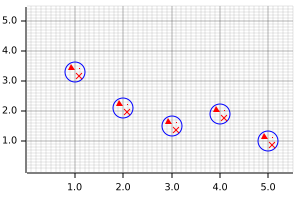 |
|---|
| 34 | |
|---|
| 35 | */ |
|---|
| 36 | pub struct EmptyElement<Coord, DB: DrawingBackend> { |
|---|
| 37 | coord: Coord, |
|---|
| 38 | phantom: PhantomData<DB>, |
|---|
| 39 | } |
|---|
| 40 | |
|---|
| 41 | impl<Coord, DB: DrawingBackend> EmptyElement<Coord, DB> { |
|---|
| 42 | /** |
|---|
| 43 | An empty composable element. This is the starting point of a composed element. |
|---|
| 44 | |
|---|
| 45 | See [`EmptyElement`] for more information and examples. |
|---|
| 46 | */ |
|---|
| 47 | pub fn at(coord: Coord) -> Self { |
|---|
| 48 | Self { |
|---|
| 49 | coord, |
|---|
| 50 | phantom: PhantomData, |
|---|
| 51 | } |
|---|
| 52 | } |
|---|
| 53 | } |
|---|
| 54 | |
|---|
| 55 | impl<Coord, Other, DB: DrawingBackend> Add<Other> for EmptyElement<Coord, DB> |
|---|
| 56 | where |
|---|
| 57 | Other: Drawable<DB>, |
|---|
| 58 | for<'a> &'a Other: PointCollection<'a, BackendCoord>, |
|---|
| 59 | { |
|---|
| 60 | type Output = BoxedElement<Coord, DB, Other>; |
|---|
| 61 | fn add(self, other: Other) -> Self::Output { |
|---|
| 62 | BoxedElement { |
|---|
| 63 | offset: self.coord, |
|---|
| 64 | inner: other, |
|---|
| 65 | phantom: PhantomData, |
|---|
| 66 | } |
|---|
| 67 | } |
|---|
| 68 | } |
|---|
| 69 | |
|---|
| 70 | impl<'a, Coord, DB: DrawingBackend> PointCollection<'a, Coord> for &'a EmptyElement<Coord, DB> { |
|---|
| 71 | type Point = &'a Coord; |
|---|
| 72 | type IntoIter = Once<&'a Coord>; |
|---|
| 73 | fn point_iter(self) -> Self::IntoIter { |
|---|
| 74 | once(&self.coord) |
|---|
| 75 | } |
|---|
| 76 | } |
|---|
| 77 | |
|---|
| 78 | impl<Coord, DB: DrawingBackend> Drawable<DB> for EmptyElement<Coord, DB> { |
|---|
| 79 | fn draw<I: Iterator<Item = BackendCoord>>( |
|---|
| 80 | &self, |
|---|
| 81 | _pos: I, |
|---|
| 82 | _backend: &mut DB, |
|---|
| 83 | _: (u32, u32), |
|---|
| 84 | ) -> Result<(), DrawingErrorKind<DB::ErrorType>> { |
|---|
| 85 | Ok(()) |
|---|
| 86 | } |
|---|
| 87 | } |
|---|
| 88 | |
|---|
| 89 | /** |
|---|
| 90 | A container for one drawable element, used for composition. |
|---|
| 91 | |
|---|
| 92 | This is used internally by Plotters and should probably not be included in user code. |
|---|
| 93 | See [`EmptyElement`] for more information and examples. |
|---|
| 94 | */ |
|---|
| 95 | pub struct BoxedElement<Coord, DB: DrawingBackend, A: Drawable<DB>> { |
|---|
| 96 | inner: A, |
|---|
| 97 | offset: Coord, |
|---|
| 98 | phantom: PhantomData<DB>, |
|---|
| 99 | } |
|---|
| 100 | |
|---|
| 101 | impl<'b, Coord, DB: DrawingBackend, A: Drawable<DB>> PointCollection<'b, Coord> |
|---|
| 102 | for &'b BoxedElement<Coord, DB, A> |
|---|
| 103 | { |
|---|
| 104 | type Point = &'b Coord; |
|---|
| 105 | type IntoIter = Once<&'b Coord>; |
|---|
| 106 | fn point_iter(self) -> Self::IntoIter { |
|---|
| 107 | once(&self.offset) |
|---|
| 108 | } |
|---|
| 109 | } |
|---|
| 110 | |
|---|
| 111 | impl<Coord, DB: DrawingBackend, A> Drawable<DB> for BoxedElement<Coord, DB, A> |
|---|
| 112 | where |
|---|
| 113 | for<'a> &'a A: PointCollection<'a, BackendCoord>, |
|---|
| 114 | A: Drawable<DB>, |
|---|
| 115 | { |
|---|
| 116 | fn draw<I: Iterator<Item = BackendCoord>>( |
|---|
| 117 | &self, |
|---|
| 118 | mut pos: I, |
|---|
| 119 | backend: &mut DB, |
|---|
| 120 | ps: (u32, u32), |
|---|
| 121 | ) -> Result<(), DrawingErrorKind<DB::ErrorType>> { |
|---|
| 122 | if let Some((x0: i32, y0: i32)) = pos.next() { |
|---|
| 123 | self.inner.draw( |
|---|
| 124 | self.inner.point_iter().into_iter().map(|p| { |
|---|
| 125 | let p = p.borrow(); |
|---|
| 126 | (p.0 + x0, p.1 + y0) |
|---|
| 127 | }), |
|---|
| 128 | backend, |
|---|
| 129 | parent_dim:ps, |
|---|
| 130 | )?; |
|---|
| 131 | } |
|---|
| 132 | Ok(()) |
|---|
| 133 | } |
|---|
| 134 | } |
|---|
| 135 | |
|---|
| 136 | impl<Coord, DB: DrawingBackend, My, Yours> Add<Yours> for BoxedElement<Coord, DB, My> |
|---|
| 137 | where |
|---|
| 138 | My: Drawable<DB>, |
|---|
| 139 | for<'a> &'a My: PointCollection<'a, BackendCoord>, |
|---|
| 140 | Yours: Drawable<DB>, |
|---|
| 141 | for<'a> &'a Yours: PointCollection<'a, BackendCoord>, |
|---|
| 142 | { |
|---|
| 143 | type Output = ComposedElement<Coord, DB, My, Yours>; |
|---|
| 144 | fn add(self, yours: Yours) -> Self::Output { |
|---|
| 145 | ComposedElement { |
|---|
| 146 | offset: self.offset, |
|---|
| 147 | first: self.inner, |
|---|
| 148 | second: yours, |
|---|
| 149 | phantom: PhantomData, |
|---|
| 150 | } |
|---|
| 151 | } |
|---|
| 152 | } |
|---|
| 153 | |
|---|
| 154 | /** |
|---|
| 155 | A container for two drawable elements, used for composition. |
|---|
| 156 | |
|---|
| 157 | This is used internally by Plotters and should probably not be included in user code. |
|---|
| 158 | See [`EmptyElement`] for more information and examples. |
|---|
| 159 | */ |
|---|
| 160 | pub struct ComposedElement<Coord, DB: DrawingBackend, A, B> |
|---|
| 161 | where |
|---|
| 162 | A: Drawable<DB>, |
|---|
| 163 | B: Drawable<DB>, |
|---|
| 164 | { |
|---|
| 165 | first: A, |
|---|
| 166 | second: B, |
|---|
| 167 | offset: Coord, |
|---|
| 168 | phantom: PhantomData<DB>, |
|---|
| 169 | } |
|---|
| 170 | |
|---|
| 171 | impl<'b, Coord, DB: DrawingBackend, A, B> PointCollection<'b, Coord> |
|---|
| 172 | for &'b ComposedElement<Coord, DB, A, B> |
|---|
| 173 | where |
|---|
| 174 | A: Drawable<DB>, |
|---|
| 175 | B: Drawable<DB>, |
|---|
| 176 | { |
|---|
| 177 | type Point = &'b Coord; |
|---|
| 178 | type IntoIter = Once<&'b Coord>; |
|---|
| 179 | fn point_iter(self) -> Self::IntoIter { |
|---|
| 180 | once(&self.offset) |
|---|
| 181 | } |
|---|
| 182 | } |
|---|
| 183 | |
|---|
| 184 | impl<Coord, DB: DrawingBackend, A, B> Drawable<DB> for ComposedElement<Coord, DB, A, B> |
|---|
| 185 | where |
|---|
| 186 | for<'a> &'a A: PointCollection<'a, BackendCoord>, |
|---|
| 187 | for<'b> &'b B: PointCollection<'b, BackendCoord>, |
|---|
| 188 | A: Drawable<DB>, |
|---|
| 189 | B: Drawable<DB>, |
|---|
| 190 | { |
|---|
| 191 | fn draw<I: Iterator<Item = BackendCoord>>( |
|---|
| 192 | &self, |
|---|
| 193 | mut pos: I, |
|---|
| 194 | backend: &mut DB, |
|---|
| 195 | ps: (u32, u32), |
|---|
| 196 | ) -> Result<(), DrawingErrorKind<DB::ErrorType>> { |
|---|
| 197 | if let Some((x0, y0)) = pos.next() { |
|---|
| 198 | self.first.draw( |
|---|
| 199 | self.first.point_iter().into_iter().map(|p| { |
|---|
| 200 | let p = p.borrow(); |
|---|
| 201 | (p.0 + x0, p.1 + y0) |
|---|
| 202 | }), |
|---|
| 203 | backend, |
|---|
| 204 | ps, |
|---|
| 205 | )?; |
|---|
| 206 | self.second.draw( |
|---|
| 207 | self.second.point_iter().into_iter().map(|p| { |
|---|
| 208 | let p = p.borrow(); |
|---|
| 209 | (p.0 + x0, p.1 + y0) |
|---|
| 210 | }), |
|---|
| 211 | backend, |
|---|
| 212 | ps, |
|---|
| 213 | )?; |
|---|
| 214 | } |
|---|
| 215 | Ok(()) |
|---|
| 216 | } |
|---|
| 217 | } |
|---|
| 218 | |
|---|
| 219 | impl<Coord, DB: DrawingBackend, A, B, C> Add<C> for ComposedElement<Coord, DB, A, B> |
|---|
| 220 | where |
|---|
| 221 | A: Drawable<DB>, |
|---|
| 222 | for<'a> &'a A: PointCollection<'a, BackendCoord>, |
|---|
| 223 | B: Drawable<DB>, |
|---|
| 224 | for<'a> &'a B: PointCollection<'a, BackendCoord>, |
|---|
| 225 | C: Drawable<DB>, |
|---|
| 226 | for<'a> &'a C: PointCollection<'a, BackendCoord>, |
|---|
| 227 | { |
|---|
| 228 | type Output = ComposedElement<Coord, DB, A, ComposedElement<BackendCoord, DB, B, C>>; |
|---|
| 229 | fn add(self, rhs: C) -> Self::Output { |
|---|
| 230 | ComposedElement { |
|---|
| 231 | offset: self.offset, |
|---|
| 232 | first: self.first, |
|---|
| 233 | second: ComposedElement { |
|---|
| 234 | offset: (0, 0), |
|---|
| 235 | first: self.second, |
|---|
| 236 | second: rhs, |
|---|
| 237 | phantom: PhantomData, |
|---|
| 238 | }, |
|---|
| 239 | phantom: PhantomData, |
|---|
| 240 | } |
|---|
| 241 | } |
|---|
| 242 | } |
|---|
| 243 | |
|---|
